
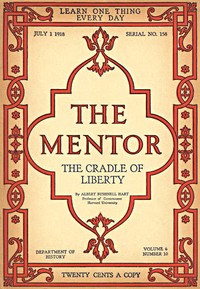
The Mentor: The Cradle of Liberty, Vol. 6, Num. 10, Serial No. 158, July 1,…
Let's be clear: this isn't a page-turning thriller. 'The Mentor: The Cradle of Liberty' is a single issue from an early 20th-century educational magazine series. Published in July 1908, it was designed for self-improvement, part of a subscription that brought illustrated lessons on art, history, and science to people's homes.
The Story
There's no character arc, but there is a journey. Professor Hart acts as your guide, walking you through the key physical and ideological sites of the American Revolution—the 'cradle.' He starts with the big idea of liberty itself, then zooms in on places like Faneuil Hall in Boston and Independence Hall in Philadelphia. He talks about the people—the thinkers, the agitators, the soldiers—who turned protest into a new nation. The 'plot' is the building of a national origin story, piece by piece, for an audience that was increasingly urban and industrial, yet still deeply connected to this revolutionary past.
Why You Should Read It
The magic here is in the perspective. Reading this in the 21st century gives you a double layer of history. You're learning about the 1770s, but you're also seeing how a respected historian in the 1900s chose to present it. What did he emphasize? What values was he imparting to his readers? His tone is confident, instructive, and proudly patriotic in a way that feels both familiar and dated. It’s a masterclass in how national narratives are shaped and taught. I found myself less focused on the facts about Paul Revere (which I mostly knew) and more fascinated by Hart's voice and his mission to make history tangible for the everyday person of his day.
Final Verdict
This is a niche read, but a rewarding one. It's perfect for history buffs who enjoy primary sources, teachers curious about historical pedagogy, or anyone who likes the idea of 'meta-history.' Don't go in expecting a modern narrative history. Go in as an explorer, holding a document that taught Americans about America over a century ago. It’s a short, concentrated dose of a bygone era's mindset, and sometimes, that's more revealing than any textbook.
This title is part of the public domain archive. Access is open to everyone around the world.
Lisa Lewis
6 months agoHaving read this twice, the emotional weight of the story is balanced perfectly. Thanks for sharing this review.
Aiden Johnson
9 months agoBased on the summary, I decided to read it and the clarity of the writing makes this accessible. A true masterpiece.
Elizabeth Walker
1 year agoMy professor recommended this, and I see why.
James Walker
4 months agoI had low expectations initially, however the narrative structure is incredibly compelling. Exceeded all my expectations.
Michael Taylor
2 years agoThis work demonstrates a clear mastery of contemporary theories.