Society Culture
A focused group of public-domain works connected by subject, literary setting and recurring questions.
Independent digital catalogue
The ITIIC Historical Social Sciences Library is a digital collection of 93 public-domain books by 117 authors, focused on historical perspectives on society and culture. Its four categories—Society Culture, Anthropology, Social Conditions, and Customs Everyday Life—offer distinct lenses on human interaction. With Social Conditions as the largest (53 books) and Anthropology the smallest (2), the catalogue balances breadth with depth. Readers can approach the collection by topic, by comparing categories, or by exploring how different works address similar social questions. This overview helps orient researchers to the library's scope and organization.
Subject gateways
Browse the library by subject, era, and the kind of source material you are interested in.
A focused group of public-domain works connected by subject, literary setting and recurring questions.
Texts connected with historical lives, social customs, institutions and the worlds in which people lived.
A closer look
One work and three nearby readings from the current catalogue.

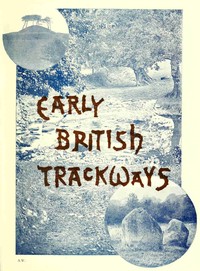
Authored by Authors: Watkins, Alfred, 1855-1935, 'Early British trackways, moats, ...' stands as a notable and significant work within the Social Conditions category. Alfred Watkins's 1921 lecture proposes that prehistoric British trackways, known as 'leys,' were aligned in straight lines linking mounds, moats, camps, and churches. Drawing on fieldwork in Herefordshire, he argues these alignments predate Roman roads and influenced place names, offering a systematic method for identifying ancient sighting points. It serves as a vital entry point into the broader subjects represented in our archive.
View catalogue record
Routes through the collection
Four routes into the collection for readers approaching the catalogue with different questions.
Record framework
Explains how catalogue entries are organized and related, without changing the source texts.
Connect each catalogue entry with the available files and references currently on site.
Show clear title, author, and edition details so you can identify each work at a glance.
Group titles according to recurring themes, historical settings, and scholarly questions.
Outline connections between catalogue entries while keeping the source texts unchanged.
About these records
How the collection is organized, presented and corrected.
It generally means that the represented source text is no longer protected by copyright in the applicable jurisdiction or has been released for public use. Status may vary by country and edition.
A record may include the title, author, category, cover, description, edition information, source references and available reading or download options.
A category reflects a work’s principal subjects, literary setting, source type and relationship to nearby records in the collection.
The catalogue adds navigation, metadata and editorial context. The represented source text retains its wording, edition information and rights status.
Use the contact page and include the work title, page address and the exact attribution, category, metadata or source detail requiring attention.
Catalogue stewardship
Catalogue information
ITIIC Catalogue manages the site's structure, which contains 93 books, 117 authors, and 4 categories.