About 356 minutes
The Book of Love — Key Ideas to Explore
Society Culture
81,792 recorded words. 0 minutes difference from this book's estimate.
View Gutenberg source #57423
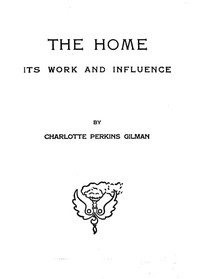
This digital edition of The home: its work and influence — Edition Insights is described by source-level measurements including 81,692 words, 5 hr 56 min estimated reading time, and 7 detected text sections.
The text analysis averages about 22.5 words per sentence, while the detected sections provide another way to judge how the source is divided.
Project Gutenberg metadata also associates the work with “Home,” connecting these edition facts with the source record’s subject description.
Explore this collection
These alternatives are selected using recorded categories and estimated reading time.
About 356 minutes
Society Culture
81,792 recorded words. 0 minutes difference from this book's estimate.
View Gutenberg source #57423About 374 minutes
Society Culture
85,834 recorded words. 18 minutes difference from this book's estimate.
View Gutenberg source #45502About 328 minutes
Society Culture
75,320 recorded words. 28 minutes difference from this book's estimate.
View Gutenberg source #40914Search stored excerpts and compare books → Choose by your preferences →
Choices use stored catalog measurements. Estimates vary with reading speed. A shared category is a catalog label, not a claim that two books have the same argument or literary quality.
Search reads excerpt text stored with this catalog and links to its associated Gutenberg record. The connection is stored in the site database; this tool does not recheck that every excerpt is word-for-word identical to that external record. Excerpt search does not cover every chapter and does not verify historical publication dates.
Catalog snapshot checked: 2026-09-26. Coverage: 93 public books, 93 available source excerpts.
Calculated from edition completeness, EPUB availability, text structure and catalogue metadata. Not a user rating.
Total of 100 points, scaled to a 2.5-5.0 range. Editions with an empty description or a missing EPUB file are not scored.
Public-domain source text
The source text is kept in the dedicated reader, separate from this catalogue record and its commentary.
Charlotte Perkins Gilman opens The Home: Its Work and Influence with a dedicatory list that immediately signals her critical stance: she addresses not only the man who maintains a home and the woman who keeps house, but also the house-servant “owned, hired, or married” and every boy and girl who lives at home. This inclusive, unsettling framing sets the tone for a work that treats the home as an institution to be analyzed rather than sentimentalized. The prefatory poem, “Two Callings,” dramatizes the tension between the home’s seductive promises—safety, comfort, love, motherhood—and the speaker’s rebellion against the roles of “squaw—the slave—the harem beauty.” Gilman’s argument proceeds through seventeen chapters that trace the home’s evolution, its mythology, and its effects on women, children, and men, always insisting that what we call “domestic” is in fact a set of economic and social arrangements open to change.
Gilman devotes two consecutive chapters to the home as a workplace, distinguishing between the housewife and the housemaid. She treats housework not as a labor of love but as a form of production—inefficient, isolated, and unpaid. In “The Home as a Workshop. I. The Housewife,” she argues that the housewife’s work is “primitive” because it combines many trades (cook, cleaner, nurse, teacher) without specialization or modern tools. The second chapter extends the analysis to hired domestic servants, whom she calls “house-servants” to emphasize their economic role. Gilman’s language is blunt: she describes the housewife’s labor as “flatly dishonourable” when measured against professional standards, and she notes that women “do cheerfully and unblushingly” things that would shame a man in public life. These chapters ground her broader critique in concrete, daily tasks.
In “Domestic Ethics,” Gilman argues that the home cultivates virtues that are “good in degree” but insufficient for modern society. She writes that “the standard of honour in the home is not that of ‘an officer and a gentleman,’” and she gives examples: a woman may slip in line, break engagements, or cancel reservations without a qualm, all while maintaining a “high standard of chastity.” The home, she says, is “the cradle of all the virtues, but we are in a stage of social development where we need virtues beyond the cradle size.” This section reveals Gilman’s method: she takes a cherished ideal—the home as moral nursery—and tests it against observable behavior, finding it wanting. The critique is not of individual women but of an institution that limits moral growth to a “primitive standard.”
Chapter X, “Domestic Entertainment,” traces the evolution of hospitality from a necessary virtue among scattered populations to a burdensome social performance in modern homes. Gilman observes that hospitality flourishes where travel is difficult and dangerous—among “Bedouin Arabs and the Scotch Highlanders,” on the American frontier—and declines with improved roads and communication. She notes wryly that “to have a fresh, clean, rosy traveller drop in after half an hour’s pleasant stroll does not touch the springs of hospitality.” The chapter charts how the simple guest-chamber swells into drawing-rooms, ballrooms, and even private theatres, transforming the home into “a house of entertainment.” Gilman uses this historical lens to argue that many domestic customs are not timeless but responses to specific conditions that no longer obtain.
Two chapters examine the effects of home life on children and adolescent girls. In “The Child at Home,” Gilman contends that the isolated household deprives children of the company of peers and the stimulation of a wider world, stunting their social development. “The Girl at Home” extends the argument to young women, who are trained for domesticity rather than independence. Gilman’s evidence is drawn from observation of everyday routines: the girl learns to serve, to defer, to limit her ambitions to the “home sphere.” These chapters are among the most concrete in the book, as Gilman describes the physical and psychological confinement of the home. She does not claim to know every family’s experience, but she generalizes from the structural conditions she has laid out in earlier chapters.
Gilman’s argument is cumulative: each chapter builds on the previous one, moving from the home’s evolutionary origins to its present inefficiencies and ethical shortcomings. Readers will benefit from noting how she uses historical comparison—contrasting the modern home with earlier forms—and how she repeatedly returns to the theme of wasted human potential. The book is not a memoir or a novel but a work of social criticism, and its force depends on the clarity of its evidence and the boldness of its proposals. Approaching it as a sustained argument rather than a collection of essays will reveal the coherence of Gilman’s vision.
Reading Gilman’s argument about the home’s quiet constraints reminded me of my own grandmother’s kitchen, where the kettle’s steam felt like a curtain drawn against the world. I found that same hush of enclosure in The South Isles of Aran (County Galway) — A Reader’s Guide, where island life seemed held in a similar stillness, both beautiful and limiting.
Capture what you thought, learned, and would like to remember.