eBooks
93 Books foundExploring the ITIIC Public Domain Literature Library
The /ebooks catalogue provides access to 93 public-domain works, each carefully prepared for modern readers. The collection spans four categories, offering a curated selection of historical, sociological, and ethnographic texts. Browsing is straightforward: you can navigate by category from the main page, or directly access any book through its unique URL. Each book record includes the author, publisher, keywords, target reader description, and a catalogue note that explains the work's content and context.
Understanding Book Records
Every book page presents essential bibliographic information. The title and author are clearly stated, along with the publisher (always Project Gutenberg for this collection). Keywords and target reader fields help you assess relevance. The catalogue note offers a substantive summary of the work's focus and style, often drawing on specific passages or themes. This note is prepared as supplementary catalogue material impression.
Source Attribution
All texts in this library derive from Project Gutenberg, a trusted source of public-domain literature. The catalogue does not host original scans but provides editorial enhancements such as reading companions, edition insights, and thematic notes. These additions are clearly labeled and do not alter the underlying public-domain content.
Categories as Navigation Aids
The collection is organized into four categories: Society Culture; Anthropology; Social Conditions; and Customs Everyday Life. These categories are not rigid literary judgments but practical groupings. For instance, a work like How the Other Half Lives appears under Nations, Peoples & the Past because of its documentary approach to urban life, while The Crowd belongs to Society, Culture & Customs for its psychological focus. Browsing by category reveals thematic connections and helps you discover related works.
Three Practical Reading Paths
Path 1: Social Reform Chronology – Begin with How the Other Half Lives (Jacob Riis, 1890) to understand urban poverty, then read The Bitter Cry of Outcast London (Andrew Mearns, 1883) for a transatlantic perspective, and finish with The Leaven in a Great City (Lillian Betts, early 1900s) to see settlement work in action.
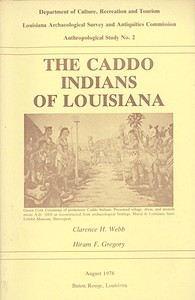
Path 2: Indigenous Cultures Across the Americas – Start with Indians of the Yosemite Valley (Galen Clark) for California Native life, move to Reports on the Maya Indians of Yucatan (edited by Marshall Saville) for colonial-era accounts, and conclude with The Caddo Indians of Louisiana (Hiram Gregory) for archaeological insights.
Path 3: Gender and Labor Studies – Explore The Employments of Women (Virginia Penny, 1863) for a catalog of occupations, then Women Wage-Earners (Helen Campbell, 1893) for statistical analysis, and finally Women's Work (A.A. Brooke, 1894) for a focus on industrial labor.
Continuing Exploration
These paths are only starting points. Each work contains further cross-references and related subjects. The catalogue is regularly reviewed, and editorial notes provide context for informed reading. For corrections or suggestions, visit the contact page. The editorial standards explain the practices behind this collection.
Bibliographic dates and catalogue measurements
The catalogue distinguishes the Project Gutenberg digital release from a work’s original or first publication. Project Gutenberg is identified as the digital source for the edition available here; its release year is therefore shown as Gutenberg Release Year, not as the work’s original publication year.
When an explicit first-publication or issue date can be supported directly by the title or issue information, it may be shown separately as First Publication Year. When that date cannot be confirmed, the catalogue displays Not confirmed rather than guessing a year.
Where the source text can be measured reliably, the catalogue may provide word count and estimated reading time. These measurements describe reading scope and are not quality rankings.
The current catalogue contains 4 active subject categories: Society Culture, Anthropology, Social Conditions, and Customs Everyday Life. Categories are browsing aids and may overlap where a work reasonably fits more than one subject.
- Featured