About 58 minutes
Hawkins-Davison Houses, Frederica, St. Simons Island, Georgia — Inside the Classic
Society Culture
13,267 recorded words. 1 minutes difference from this book's estimate.
View Gutenberg source #64684
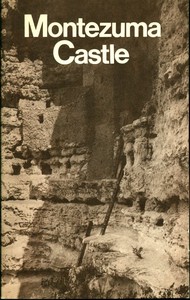
Montezuma Castle National Monument, Arizona (1977) — Themes and Context can be approached with a clearer sense of reading commitment from its source measurements: 12,937 words, 57 min estimated reading time, and 2 detected text sections.
The text analysis averages about 19.8 words per sentence, while the detected sections provide another way to judge how the source is divided.
Project Gutenberg metadata also associates the work with “Indians of North America -- Arizona,” connecting these edition facts with the source record’s subject description.
Explore this collection
These alternatives are selected using recorded categories and estimated reading time.
About 58 minutes
Society Culture
13,267 recorded words. 1 minutes difference from this book's estimate.
View Gutenberg source #64684About 60 minutes
Society Culture
13,679 recorded words. 3 minutes difference from this book's estimate.
View Gutenberg source #53631About 62 minutes
Society Culture
14,077 recorded words. 5 minutes difference from this book's estimate.
View Gutenberg source #67235Search stored excerpts and compare books → Choose by your preferences →
Choices use stored catalog measurements. Estimates vary with reading speed. A shared category is a catalog label, not a claim that two books have the same argument or literary quality.
Search reads excerpt text stored with this catalog and links to its associated Gutenberg record. The connection is stored in the site database; this tool does not recheck that every excerpt is word-for-word identical to that external record. Excerpt search does not cover every chapter and does not verify historical publication dates.
Catalog snapshot checked: 2026-09-26. Coverage: 93 public books, 93 available source excerpts.
Calculated from edition completeness, EPUB availability, text structure and catalogue metadata. Not a user rating.
Total of 100 points, scaled to a 2.5-5.0 range. Editions with an empty description or a missing EPUB file are not scored.
Public-domain source text
The source text is kept in the dedicated reader, separate from this catalogue record and its commentary.
The authors of this National Park Service handbook open by immediately dispelling a popular misconception: Montezuma Castle has no connection to the Aztec emperor. This rhetorical move establishes the handbook's authority while acknowledging the romantic names that persist. The prose then shifts to a careful, evidence-based reconstruction of Sinagua daily life, drawing on material remains like broken pottery, trash, and smoke-blackened walls. The authors deliberately use sensory details—the feel of plaster, the smell of smoke—to bridge the gap between archaeological data and lived experience.
The handbook's language is precise and unadorned, typical of mid-century government publications. Yet the authors make strategic choices that shape the reader's perception. They refer to the Sinagua as "peaceful farmers," a characterization that humanizes without romanticizing. The phrase "their fingers left marks as they plastered the walls" invites the reader to imagine a tactile connection to the past. The authors also use modal verbs like "must have" to acknowledge inference: "cutting a large timber must have consumed considerable time." This cautious language signals scientific honesty while still offering a vivid picture.
The authors frequently use direct address, as in "we hope that it can take you back in your mind's eye." This creates a sense of shared exploration rather than dry instruction. The handbook also poses implicit questions: why are doors so low? The answer—defense and insulation—is presented as a logical deduction from the evidence. This technique turns the reader into an active participant in the archaeological reasoning. The authors even correct earlier misconceptions, such as the idea that pigmies built the Castle, by presenting skeletal evidence of average height.
The handbook's structure mirrors its argument: human history is embedded in geological time. The first section, "Forces of Earth," describes the formation of the cave and well over a million years, establishing a deep-time context. Only then do the authors turn to the Sinagua, who occupied the area from the 1100s to the 1400s. This sequencing emphasizes that the landscape shaped human possibilities. Within the human story, the authors move from general lifeways to specific features of the Castle, then to other sites like Montezuma Well, creating a logical spatial and temporal progression.
Smoke and soot appear repeatedly as evidence of domestic activity. The authors note that smoke-blackened ceilings and walls resulted from indoor fires without chimneys. They even explain why one ceiling is now clean: bats rubbing off the soot over years of roosting. Such details ground the narrative in physical traces. Other recurring motifs include the small doorways, the absence of windows, and the mud floors worn thin by visitors. These observations build a cumulative picture of a space designed for warmth, defense, and floor-level living, contrasting sharply with modern expectations.
Readers should attend to how the authors balance scientific caution with evocative description. The handbook never claims certainty where evidence is lacking, but it uses inference to animate the past. Notice also the interplay between the official, institutional voice and the more intimate moments of direct address. This tension is central to the handbook's effectiveness as both a reference work and a narrative of discovery.
Years among the shelves, I’ve noticed how two books can hold the same quiet breath. The Arizona handbook traces stones and shadows, piecing a vanished people’s days from patient detail. That care for memory—for who lived and what they left—echoes in The Old World in the New The Significance of Past and Present Immigration to the American People — Reading Notes, where each arrival story asks the same gentle question: how does home persist? Both read like whispers across centuries, and I’m glad they share my table.
Use these questions to collect your thoughts before moving on.