About 58 minutes
Hawkins-Davison Houses, Frederica, St. Simons Island, Georgia — Inside the Classic
Society Culture
13,267 recorded words. 2 minutes difference from this book's estimate.
View Gutenberg source #64684
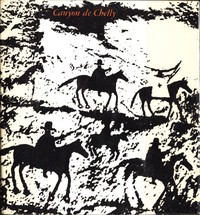
This digital edition of Canyon de Chelly: The Story of Its Ruins and People — Reading Companion is described by source-level measurements including 13,679 words, 1 hr estimated reading time, and 2 detected text sections.
The text analysis averages about 20.3 words per sentence, while the detected sections provide another way to judge how the source is divided.
Project Gutenberg metadata also associates the work with “Navajo Indians,” connecting these edition facts with the source record’s subject description.
Explore this collection
These alternatives are selected using recorded categories and estimated reading time.
About 58 minutes
Society Culture
13,267 recorded words. 2 minutes difference from this book's estimate.
View Gutenberg source #64684About 62 minutes
Society Culture
14,077 recorded words. 2 minutes difference from this book's estimate.
View Gutenberg source #67235About 57 minutes
Society Culture
12,937 recorded words. 3 minutes difference from this book's estimate.
View Gutenberg source #49607Search stored excerpts and compare books → Choose by your preferences →
Choices use stored catalog measurements. Estimates vary with reading speed. A shared category is a catalog label, not a claim that two books have the same argument or literary quality.
Search reads excerpt text stored with this catalog and links to its associated Gutenberg record. The connection is stored in the site database; this tool does not recheck that every excerpt is word-for-word identical to that external record. Excerpt search does not cover every chapter and does not verify historical publication dates.
Catalog snapshot checked: 2026-09-26. Coverage: 93 public books, 93 available source excerpts.
Calculated from edition completeness, EPUB availability, text structure and catalogue metadata. Not a user rating.
Total of 100 points, scaled to a 2.5-5.0 range. Editions with an empty description or a missing EPUB file are not scored.
Public-domain source text
The source text is kept in the dedicated reader, separate from this catalogue record and its commentary.
The book begins not with its own prose but with Willa Cather's 1925 description of a "little city of stone asleep" in a cliff cavern—a quotation that sets an archaeological, almost reverent tone. Bradley then immediately shifts to a factual National Park Service register: location, square miles, canyon names, and the assertion that the ruins show "man's ability to adjust to a difficult environment." This juxtaposition of literary wonder and bureaucratic precision is the first clue that the book will move between two registers: the romantic pull of abandoned stone villages and the hard realities of the people who built and later inhabited them.
Cather's lines—"It was as still as sculpture" and "preserved in the dry air and almost perpetual sunlight like a fly in amber"—are not decorative. They prime the reader to see the ruins as artifacts of an "extinct civilization," a phrase that the book's own text will complicate. The epigraph emphasizes silence, stillness, and the absence of living people. Bradley's opening paragraph, by contrast, immediately introduces the Navajo who "now live in the shadows of these deep canyons" and whose hogans are "almost hidden by the thick growth of willows and cottonwoods." The tension between Cather's frozen past and Bradley's living present is the book's central dynamic.
The table of contents divides the book into two main parts: "The Principal Ruins" and "The People of Canyon de Chelly." The ruins section describes specific sites—White House, Antelope House, Standing Cow, Big Cave, Mummy Cave—with archaeological detail. The people section splits into "The Anasazi" and "The Navajos." This structure suggests that the ruins are not just picturesque but are evidence of successive human occupations. A first-time reader should note that the book spends roughly equal space on the ancient Puebloan (Anasazi) builders and the Navajo who arrived later, implying a layered history rather than a single narrative.
The longest continuous excerpt details U.S. military campaigns against the Navajo from 1846 to 1860. Bradley emphasizes a recurring pattern: American commanders assumed a single Navajo chief could sign binding treaties, but "each local Navajo group had its own leader." The result was a cycle of treaties, raids, and punitive expeditions. The 1849 treaty signed at "Treaty Hill" near Canyon de Chelly was broken almost immediately. This section is not a general history but a focused account of how the canyon became a site of conflict. Readers should watch how Bradley uses specific place names—Bear Springs, Fort Defiance, Canyon de Chelly itself—to anchor the narrative in geography.
Bradley writes as a National Park Service archaeologist, not a novelist. His prose is plain and declarative: "Included in its 131 square miles are three spectacular canyons." He avoids first-person opinion and rarely evaluates the ruins aesthetically. When he does use evocative language—"enduring monuments to the culture of the ancestors"—it is in service of interpretation, not atmosphere. The book's authority comes from its institutional origin and its reliance on documented expeditions (Stevenson Survey, Kearny's march, Doniphan's campaign). A first reader should trust the factual claims but note that the book was published in 1973 and may reflect archaeological conventions of its time.
This book is best read as a concise, site-specific introduction rather than a comprehensive history. The epigraph invites wonder; the text supplies context. Readers who want to understand how the ruins relate to the Navajo present should pay close attention to the transition between the two main sections. The excerpts end before the book's discussion of Navajo culture and the later chapters, so the full arc of the story remains incomplete in this sample.
Sitting with the Cather epigraph, I remembered standing in a dry riverbed once, feeling time stacked like sediment. That same quiet ache came back reading A history of postal agitation from fifty years ago till the present day — Reading Companion—how ordinary lives press their urgency into stone or stamped paper, and we only later glimpse the shape of what they carried.
Capture what you thought, learned, and would like to remember.