About 403 minutes
"Broke," The Man Without the Dime — Edition Insights
Social Conditions
92,551 recorded words. 33 minutes difference from this book's estimate.
View Gutenberg source #45412
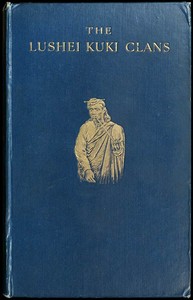
This digital edition of The Lushei Kuki Clans — Themes and Context is described by source-level measurements including 100,193 words, 7 hr 16 min estimated reading time, and 24 detected text sections.
The text analysis averages about 21.1 words per sentence, while the detected sections provide another way to judge how the source is divided.
Project Gutenberg metadata also associates the work with “Lushai (Asian people),” connecting these edition facts with the source record’s subject description.
Explore this collection
These alternatives are selected using recorded categories and estimated reading time.
About 403 minutes
Social Conditions
92,551 recorded words. 33 minutes difference from this book's estimate.
View Gutenberg source #45412About 400 minutes
Social Conditions
91,953 recorded words. 36 minutes difference from this book's estimate.
View Gutenberg source #38130About 380 minutes
Social Conditions
87,222 recorded words. 56 minutes difference from this book's estimate.
View Gutenberg source #19160Search stored excerpts and compare books → Choose by your preferences →
Choices use stored catalog measurements. Estimates vary with reading speed. A shared category is a catalog label, not a claim that two books have the same argument or literary quality.
Search reads excerpt text stored with this catalog and links to its associated Gutenberg record. The connection is stored in the site database; this tool does not recheck that every excerpt is word-for-word identical to that external record. Excerpt search does not cover every chapter and does not verify historical publication dates.
Catalog snapshot checked: 2026-09-26. Coverage: 93 public books, 93 available source excerpts.
Calculated from edition completeness, EPUB availability, text structure and catalogue metadata. Not a user rating.
Total of 100 points, scaled to a 2.5-5.0 range. Editions with an empty description or a missing EPUB file are not scored.
Public-domain source text
The source text is kept in the dedicated reader, separate from this catalogue record and its commentary.
John Shakespear's The Lushei Kuki Clans (1912) opens not with a sweeping thesis but with a detailed table of contents that reveals the work's methodical structure: the book is divided into two parts, the first devoted to the Lushei clans and the second to non-Lushei groups such as the Thado and Lakhers. Each chapter proceeds from habitat and physical characteristics to domestic life, laws, religion, and folklore, creating a layered portrait of a society in transition under colonial influence. The excerpts show that Shakespear relies heavily on local informants—such as Suaka, a Sub-Inspector of Police at Aijal—whose accounts are quoted at length, giving the text a polyvocal quality rare in early twentieth-century ethnography.
The book's bipartite structure is not merely organizational but analytical. Part I treats the Lushei clans as a coherent group, while Part II groups non-Lushei clans into five categories based on their degree of assimilation. This framework allows Shakespear to highlight differences in ritual practice—such as the Sakhua sacrifice—as markers of identity. For instance, the Chawte clan is described as killing a goat for the Sakhua and omitting all Naohri sacrifices except Zinthiang and Ui-ha-awr, a detail that distinguishes them from the Lushei. The structure thus becomes a tool for tracing cultural boundaries and historical relationships.
Throughout the excerpts, material objects recur as markers of status and narrative significance. The Chongthu clan's origin story centers on Lershia, who was "the richest of all men" in mithan, gongs, and necklaces, and who first celebrated the Chong festival. The giver of a mithan sacrifice wears tail hairs on a string around his neck—a small but vivid image of how wealth is displayed. These objects are not merely listed but embedded in clan histories, linking economic power to ritual precedence. The repetition of such details across clan accounts suggests a shared symbolic language of prestige.
Shakespear's text is punctuated by movements: clans are described as "widely scattered," villages are abandoned after bad harvests, and informants trace migrations from the south or across rivers. The Hnamte clan's dispersal is attributed to "bad harvests and general misfortunes" early in the nineteenth century. The Chawte in Manipur claim their forefather came "from the hills far to the south very long ago." These movements are not merely background but are tied to social organization—the Chongthu are said to be "always upa to chiefs" wherever they settle, suggesting that mobility did not erase clan roles. The geography of the text—with named hills, rivers, and villages—anchors these movements in a specific landscape.
Shakespear frequently cedes the page to his informants, embedding their words within his own prose. The Chongthu origin story is given as a direct quotation from Suaka, complete with first-person narration and a conversational tone: "Even till now Chongthus are always 'upa' to chiefs. It may be they are wiser than the other clans." This technique preserves the informant's voice while also revealing the colonial context—Suaka is a Sub-Inspector of Police, a figure positioned between the British administration and the clans. Shakespear's own voice emerges in cautious qualifications: the list of clans "does not lay claim to being complete." The result is a text that oscillates between systematic description and the contingent, partial nature of the evidence.
Readers approaching The Lushei Kuki Clans will find that its value lies less in grand theory than in the accumulation of specific, often contradictory details. Shakespear's willingness to include informants' accounts and to acknowledge gaps in his knowledge makes the work a rich source for understanding how colonial ethnography was produced. Pay attention to the footnotes and appendices, where additional families and variant traditions are recorded, often complicating the main text's generalizations.
Long ago, I shelved Shakespear’s study of the Lushei clans, noting how carefully it gathered voices from the hills. Years later, I found its quiet echo in A Modern Purgatory — Themes and Context, where memory also waits patiently, asking only to be kept close. They sit apart, yet share a world of held breath.
A brief reflection can help important ideas stay with you longer.