About 143 minutes
The River-Names of Europe — Story, Setting & Ideas
Social Conditions
32,848 recorded words. 1 minutes difference from this book's estimate.
View Gutenberg source #35900
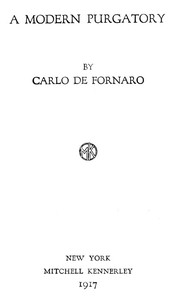
The catalog record for A Modern Purgatory — Themes and Context provides practical reading context through 32,567 words, 2 hr 22 min estimated reading time, and 4 detected text sections.
The text analysis averages about 22.8 words per sentence, while the detected sections provide another way to judge how the source is divided.
Project Gutenberg metadata also associates the work with “Manhattan Detention Complex (New York, N.Y.),” connecting these edition facts with the source record’s subject description.
Explore this collection
These alternatives are selected using recorded categories and estimated reading time.
About 143 minutes
Social Conditions
32,848 recorded words. 1 minutes difference from this book's estimate.
View Gutenberg source #35900About 150 minutes
Social Conditions
34,468 recorded words. 8 minutes difference from this book's estimate.
View Gutenberg source #67841About 126 minutes
Social Conditions
28,796 recorded words. 16 minutes difference from this book's estimate.
View Gutenberg source #32118Search stored excerpts and compare books → Choose by your preferences →
Choices use stored catalog measurements. Estimates vary with reading speed. A shared category is a catalog label, not a claim that two books have the same argument or literary quality.
Search reads excerpt text stored with this catalog and links to its associated Gutenberg record. The connection is stored in the site database; this tool does not recheck that every excerpt is word-for-word identical to that external record. Excerpt search does not cover every chapter and does not verify historical publication dates.
Catalog snapshot checked: 2026-09-26. Coverage: 93 public books, 93 available source excerpts.
Calculated from edition completeness, EPUB availability, text structure and catalogue metadata. Not a user rating.
Total of 100 points, scaled to a 2.5-5.0 range. Editions with an empty description or a missing EPUB file are not scored.
Public-domain source text
The source text is kept in the dedicated reader, separate from this catalogue record and its commentary.
Carlo de Fornaro's A Modern Purgatory opens not with his alleged crime but with a trial and immediate imprisonment, a structural choice that foregrounds the experience of incarceration over the events that led to it. The narrative voice is notably detached and analytical, even when describing brutal conditions. Fornaro, an artist and revolutionary, was imprisoned for libeling a foreign official, a prosecution he presents as unprecedented. The book is divided into four sections—The Trial, The Tombs Prison, The Penitentiary, The Hospital—each marking a distinct phase of confinement. The prose shifts between documentary observation and philosophical reflection, as when he compares prison caste systems to those in Manhattan, London, or Benares.
Fornaro’s tone is consistently cool, even when recounting brutalities. He describes the prison as a place of “ignorant and often vicious wardens and keepers,” yet he does not dwell on his own suffering. Instead, he steps back to analyze the system. For instance, he notes that life in prison “does not eradicate the convict’s idea of class,” and he traces the origin of the Camorra to Neapolitan jails. This intellectual framing distances the reader from raw emotion, inviting a sociological gaze. The voice is that of a reporter, not a victim. When he writes of a “one-legged, bull-faced negro” making a philosophical remark about thieves, the observation is almost ethnographic. The author rarely uses first-person exclamations; his anger is channeled into irony and understatement.
One of the most detailed passages in the excerpts is Fornaro’s taxonomy of convict castes. He ranks prisoners by “physical prowess and brute strength,” placing gang men and bandits at the top, followed by confidence men and forgers, then sneak thieves and wife beaters, and finally stool pigeons and detectives at the bottom. The language is precise and almost clinical: “the ethical standard is as simple as the cave dweller’s.” He notes that this hierarchy is a “sop to their vanity” and a retaliation against society. The description of the lowest caste—stool pigeons—includes the chilling observation that they are “hated, abominated, despised” and sometimes murdered. This section reads like a field report, with Fornaro as an anthropologist of prison society.
The book’s structure creates distinct changes in narrative pace. The opening “Trial” section is brisk, moving quickly to imprisonment. “The Tombs Prison” slows into a detailed account of daily life, with long paragraphs on the physical space and routines. “The Penitentiary” accelerates again, introducing the caste analysis in a more essayistic style. The final section, “The Hospital,” appears to shift to a more anecdotal mode, as seen in the vignette of the “one-legged, bull-faced negro” polishing brass chandeliers. This variation in pace mirrors the psychological experience of prison: initial shock, then grinding routine, then moments of dark humor or reflection. Fornaro’s prose adapts to each phase, from terse reportage to measured sociological commentary.
Readers should note that the excerpts provide no information about the author’s release or the aftermath of his imprisonment. The narrative ends with the hospital section, leaving the arc incomplete. Fornaro’s voice remains consistent throughout: analytical, restrained, and occasionally sardonic. Pay attention to how he uses the prison setting as a lens to critique broader social hierarchies, and how his own status as a political prisoner colors his observations without dominating them. The book is less a memoir of suffering than a study of power and caste in miniature.
I’ve always found something oddly tender in how prison’s stark order mirrors the quiet exile of a forgotten child. De Fornaro’s analytical eye catches the same loneliness that haunts That Last Waif, though one wears chains and the other, mere absence. That Last Waif; or, Social Quarantine — Text and Context feels like a softer echo of that same locked room.
Create a short personal record of your experience with this book.