
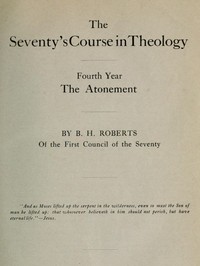
The Seventy's Course in Theology, Fourth Year by B. H. Roberts
Let's be clear from the start: this isn't a storybook. The Seventy's Course in Theology, Fourth Year is exactly what it says on the tin—a course book. Published in 1912, it was designed to be the final year of study for LDS missionaries, called Seventies, before they went out into the world. Think of it as their spiritual and intellectual boot camp manual.
The Story
There's no character arc or thrilling climax. The "plot" is the progression of ideas. Roberts lays out a year's worth of lessons, moving from foundational doctrines about God and Christ into more complex areas like the nature of scripture, the plan of salvation, and the organization of the church. He structures each chapter with a main idea, supporting scriptures (mostly from the Bible and Book of Mormon), and questions for discussion. The narrative drive comes from following his attempt to create a complete, logical, and defensible system of belief for his students. It's the story of a teacher constructing an argument, brick by brick.
Why You Should Read It
I found it compelling for two reasons. First, it's a masterclass in a specific kind of persuasion. Roberts isn't just listing beliefs; he's building a case. He anticipates objections and tries to answer them with scripture and reason. Second, and more personally, it's a snapshot of a faith in transition. Reading between the lines, you sense the pressure of the early 20th century—the rise of evolutionary theory, historical analysis of the Bible, and other secular ideas. Roberts is clearly trying to arm his students against these challenges. His voice is confident, but the very existence of such a detailed, rational course hints at the anxieties of the era. It's theology as a strategic defense.
Final Verdict
This book is a niche read, but a rewarding one. It's perfect for history buffs, especially those interested in American religion or the intellectual history of Mormonism. It's also great for anyone who enjoys seeing how belief systems are formally taught and structured. If you're looking for a personal spiritual memoir or a fast-paced narrative, look elsewhere. But if you want to sit at the desk of a early-1900s religious educator and see exactly what he wanted his students to know—and how he wanted them to think—this is a unique window. Just make sure you have some coffee; it's dense, but full of hidden gems.
This is a copyright-free edition. Share knowledge freely with the world.
George Smith
2 years agoA brilliant read that I finished in one sitting.
George Johnson
11 months agoI've gone through the entire material twice now, and the evidence-based approach makes it a very credible source of information. Thanks for making such a high-quality version available.
John Miller
2 years agoComparing this to other titles in the same genre, the emphasis on ethics and sustainability within the topic is commendable. Definitely a five-star contribution to the field.
Linda Miller
1 year agoI stumbled upon this title during my weekend research and the formatting on mobile devices is surprisingly crisp and clear. It’s a comprehensive resource that doesn't feel bloated.
Emily Moore
11 months agoThe clarity of the introduction set high expectations, and the way it challenges the status quo is both daring and well-supported. It’s hard to find this much value in a single source these days.