About 96 minutes
Indian Games : an historical research — A Closer Reading
Social Conditions
21,972 recorded words. 2 minutes difference from this book's estimate.
View Gutenberg source #6857
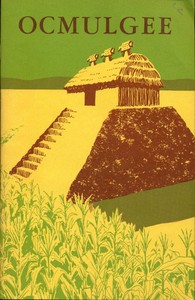
For Ocmulgee National Monument, Georgia — Edition Insights, the stored edition analysis reports 21,548 words, 1 hr 34 min estimated reading time, and 3 detected text sections.
The text analysis averages about 24.4 words per sentence, while the detected sections provide another way to judge how the source is divided.
Project Gutenberg metadata also associates the work with “Mounds -- Georgia,” connecting these edition facts with the source record’s subject description.
Explore this collection
These alternatives are selected using recorded categories and estimated reading time.
About 96 minutes
Social Conditions
21,972 recorded words. 2 minutes difference from this book's estimate.
View Gutenberg source #6857About 97 minutes
Social Conditions
22,261 recorded words. 3 minutes difference from this book's estimate.
View Gutenberg source #49829About 101 minutes
Social Conditions
23,036 recorded words. 7 minutes difference from this book's estimate.
View Gutenberg source #40873Search stored excerpts and compare books → Choose by your preferences →
Choices use stored catalog measurements. Estimates vary with reading speed. A shared category is a catalog label, not a claim that two books have the same argument or literary quality.
Search reads excerpt text stored with this catalog and links to its associated Gutenberg record. The connection is stored in the site database; this tool does not recheck that every excerpt is word-for-word identical to that external record. Excerpt search does not cover every chapter and does not verify historical publication dates.
Catalog snapshot checked: 2026-09-26. Coverage: 93 public books, 93 available source excerpts.
Calculated from edition completeness, EPUB availability, text structure and catalogue metadata. Not a user rating.
Total of 100 points, scaled to a 2.5-5.0 range. Editions with an empty description or a missing EPUB file are not scored.
Public-domain source text
The source text is kept in the dedicated reader, separate from this catalogue record and its commentary.
The Ocmulgee mounds, long a subject of speculation, were first mentioned by a ranger traveling with Oglethorpe, who described them as “three Mounts raised by the Indians over three of their Great Kings.” By 1930, specialists could only link the large pyramidal mound to Mississippi Valley cultures. Systematic excavation began in 1933 with labor from the Civil Works Administration, continuing through the Works Progress Administration and the Civilian Conservation Corps until 1941. This handbook, part of the National Park Service Historical Handbook Series, presents the archaeological findings and interpretations that emerged from that work.
One of the most striking pieces of evidence for the agricultural basis of the Ocmulgee community is a series of cultivated rows buried beneath the fill of later mound construction. The text notes that this field was not ordinary, as most fields lay in bottom land below the village. Its elevated position suggests a possible sacred purpose—perhaps an offering to spirits or a means to increase crop yields through absorbed power from the surroundings. The rows were preserved as “conclusive proof of the advanced state of culture which the Master Farmers had achieved.” This detail underscores how the physical layout of the site itself encodes ritual and economic priorities.
The handbook describes two series of great linked pits, averaging about 7 feet deep and 18 by 40 feet, traced around the north and south borders of the village. These pits provided earth for the mounds and earthlodges, but the text raises the possibility that the irregular ditches also served as protection against raids. The author notes that the pits do not enclose the entire temple mound area—three mounds lie outside their confines—and that others were destroyed during construction of Fort Hawkins and East Macon. This observation highlights the interplay between resource extraction, defensive strategy, and later historical disruption.
The handbook reconstructs an annual round of ceremonies centered on the corn deity, whose gift “had the miraculous power to renew itself every year.” The summer temple was the scene of the year’s biggest festival when the new crop ripened. All village fires were put out, and men fasted and purified themselves. The text emphasizes that the community’s well-being depended on maintaining proper relationships with unseen forces: gifts like fish, game, and corn had to be accepted with reverence, or the spirits would cause game to disappear and fields to wither. This passage reveals how the authors interpret material remains through the lens of ethnographic analogy and belief systems.
Readers should note that this handbook was published in 1956 as part of a federal series, and its interpretations reflect the archaeological understanding of that era. The text blends descriptive reporting with cautious inference, often posing questions—such as whether the pits were defensive—without definitive answers. For a fuller picture, consult the suggestions for further reading listed at the end of the volume, which include primary excavation reports and regional studies.
Those Ocmulgee earthlodges hold their secrets in layers of buried corn and careful ash, speaking of people who sheltered their hopes in the ground. It reminds me of how another volume, That Last Waif; or, Social Quarantine — Text and Context, shelters a different sort of archaeology—the quiet strata of a child's loneliness, pressed between pages like old clay.
Use these questions to collect your thoughts before moving on.