About 96 minutes
Indian Games : an historical research — A Closer Reading
Social Conditions
21,972 recorded words. 1 minutes difference from this book's estimate.
View Gutenberg source #6857
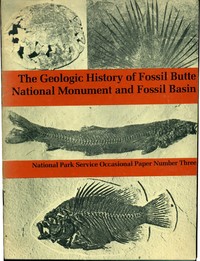
The source record for The Geological History of Fossil Butte National Monument and Fossil Basin — Themes and Context measures this digital text at 22,261 words, 1 hr 37 min estimated reading time, and 3 detected text sections.
The text analysis averages about 16.6 words per sentence, while the detected sections provide another way to judge how the source is divided.
Project Gutenberg metadata also associates the work with “Geology -- Wyoming -- Fossil Butte National Monument,” connecting these edition facts with the source record’s subject description.
Explore this collection
These alternatives are selected using recorded categories and estimated reading time.
About 96 minutes
Social Conditions
21,972 recorded words. 1 minutes difference from this book's estimate.
View Gutenberg source #6857About 94 minutes
Social Conditions
21,548 recorded words. 3 minutes difference from this book's estimate.
View Gutenberg source #49058About 101 minutes
Social Conditions
23,036 recorded words. 4 minutes difference from this book's estimate.
View Gutenberg source #40873Search stored excerpts and compare books → Choose by your preferences →
Choices use stored catalog measurements. Estimates vary with reading speed. A shared category is a catalog label, not a claim that two books have the same argument or literary quality.
Search reads excerpt text stored with this catalog and links to its associated Gutenberg record. The connection is stored in the site database; this tool does not recheck that every excerpt is word-for-word identical to that external record. Excerpt search does not cover every chapter and does not verify historical publication dates.
Catalog snapshot checked: 2026-09-26. Coverage: 93 public books, 93 available source excerpts.
Calculated from edition completeness, EPUB availability, text structure and catalogue metadata. Not a user rating.
Total of 100 points, scaled to a 2.5-5.0 range. Editions with an empty description or a missing EPUB file are not scored.
Public-domain source text
The source text is kept in the dedicated reader, separate from this catalogue record and its commentary.
The study opens with a precise geographic and temporal frame: fifty million years ago, southwestern Wyoming held a system of three freshwater lakes—Flagstaff, Gosiute, Uinta, and Fossil Lake. This initial image of interconnected lakes recurs throughout the text as a structural anchor, with each formation tied to a specific lake phase. The authors then shift abruptly to the present-day monument, creating a telescoping effect that compresses deep time into a single landscape.
The book’s organization mirrors this movement: it proceeds from location and historical research through stratigraphy, structure, paleontology, and finally paleoecology. Each section builds on the previous one, but the authors frequently interrupt the chronological flow with cross-references to earlier or later formations, reinforcing the idea that the basin’s history is a layered, interconnected system.
The table of contents reveals a deliberate stacking of formations—Thaynes Limestone, Evanston, Wasatch, Green River, Fowkes—each with its own members and depositional environments. This vertical arrangement is not merely descriptive; it becomes the book’s primary organizational device. The authors treat each formation as a chapter in the basin’s story, but they avoid a simple linear narrative. Instead, they repeatedly loop back to earlier units, noting how the Wasatch Formation’s basal conglomerate member relates to the Green River’s Fossil Butte Member. This recursive structure mirrors the geological principle of superposition while acknowledging that rock layers are not isolated events but parts of a dynamic, shifting system. The reader is thus trained to think in three dimensions: depth, time, and lateral variation.
Water appears as a persistent motif, from the initial lakes to the shoreline deposits where turtles and crocodiles are found. The text frequently describes sediments as “shore-line deposits” or “lake sediments,” emphasizing the aqueous origin of the fossils. Even when discussing terrestrial mammals, the authors note that their remains are often found in “wash and screening” processes, linking them back to water transport. Another recurring image is the “complete skeleton” or “complete shell”—the authors highlight exceptional preservation (e.g., the boa Boavus idelmani, the bird Gallinuloides) as evidence of the unique conditions in Fossil Lake. These images of wholeness contrast with the fragmentary nature of most fossils (jaws, vertebrae, isolated plates), creating a tension between the ideal of complete preservation and the reality of taphonomic loss.
The text constantly shifts between macroscopic and microscopic views. A paragraph might begin with the entire Fossil Basin, then zoom in to a specific formation, then to a single fossil jaw. For example, the discussion of mammals starts with the broad statement that mammal fossils are used for correlation and dating, then narrows to the index fossil Haplomylus, and finally to a jaw measuring 1.3 cm. This rapid scaling is a deliberate rhetorical strategy: it keeps the reader aware that every small fragment carries implications for the larger geological picture. The authors also move between temporal scales, juxtaposing the 50-million-year-old lakes with the “Quaternary” section that covers only the last 2.6 million years. This asymmetry underscores how much of the basin’s history is compressed into the Eocene, while later events are treated as a brief coda.
Throughout the paleontology section, the authors acknowledge gaps in the fossil record. They note that the absence of certain bird or mammal species “is more likely due to nondiscovery than nonexistence,” and that bird fossils are rare because hollow bones are “especially susceptible to breakage.” These admissions of uncertainty are not weaknesses but structural features: they remind the reader that the geological history is an interpretation based on incomplete evidence. The text also uses inference to bridge gaps, as when the presence of crocodiles is taken as “further evidence for a prevailing warm and humid climate.” This interplay between what is found, what is missing, and what can be deduced gives the book a cautious, scientific tone. The authors rarely claim certainty; instead, they build a case from multiple lines of evidence, often citing other researchers (Schaeffer and Mangus 1965; Brodkorb 1970) to support their conclusions.
Readers will benefit from paying attention to the book’s layered structure and its habit of moving between scales. The stratigraphic table of contents is not just a list but a map of the authors’ thinking. When you encounter a fossil description, consider how it fits into the larger basin history—and what the authors leave unsaid. The gaps are as instructive as the finds.
I recall evenings with The Geological History of Fossil Butte, how it layers lake upon lake, each era patiently waiting beneath the next. There is a similar patience in Child Versus Parent: Some Chapters on the Irrepressible Conflict in the Home — A Reader’s Guide, where old tensions settle into quiet strata, neither buried nor forgotten, just deeply understood.
Create a short personal record of your experience with this book.