About 83 minutes
John Bunyan and the Gipsies — Text and Context
Society Culture
18,867 recorded words. 9 minutes difference from this book's estimate.
View Gutenberg source #51454
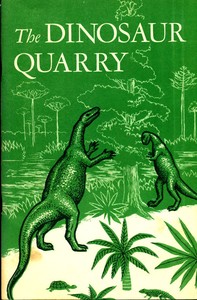
This digital edition of The Dinosaur Quarry. Dinosaur National Monument, Colorado-Utah — Key Ideas to Explore is described by source-level measurements including 16,793 words, 1 hr 14 min estimated reading time, and 3 detected text sections.
The text analysis averages about 18.2 words per sentence, while the detected sections provide another way to judge how the source is divided.
Project Gutenberg metadata also associates the work with “Dinosaurs,” connecting these edition facts with the source record’s subject description.
Explore this collection
These alternatives are selected using recorded categories and estimated reading time.
About 83 minutes
Society Culture
18,867 recorded words. 9 minutes difference from this book's estimate.
View Gutenberg source #51454About 62 minutes
Society Culture
14,077 recorded words. 12 minutes difference from this book's estimate.
View Gutenberg source #67235About 60 minutes
Society Culture
13,679 recorded words. 14 minutes difference from this book's estimate.
View Gutenberg source #53631Search stored excerpts and compare books → Choose by your preferences →
Choices use stored catalog measurements. Estimates vary with reading speed. A shared category is a catalog label, not a claim that two books have the same argument or literary quality.
Search reads excerpt text stored with this catalog and links to its associated Gutenberg record. The connection is stored in the site database; this tool does not recheck that every excerpt is word-for-word identical to that external record. Excerpt search does not cover every chapter and does not verify historical publication dates.
Catalog snapshot checked: 2026-09-26. Coverage: 93 public books, 93 available source excerpts.
Calculated from edition completeness, EPUB availability, text structure and catalogue metadata. Not a user rating.
Total of 100 points, scaled to a 2.5-5.0 range. Editions with an empty description or a missing EPUB file are not scored.
Public-domain source text
The source text is kept in the dedicated reader, separate from this catalogue record and its commentary.
The booklet opens by guiding the reader through a physical approach: from the distant mass of Split Mountain, past gray shale and sagebrush, into a portal in the rock wall, and finally to the visitor center enclosing the quarry. This movement from landscape to building mirrors the book’s own structure—a steady narrowing of focus from the Jurassic environment to the specific deposit of bones. The text repeatedly draws attention to the tilt and color of sedimentary layers, making geology visible before any dinosaur is mentioned.
The opening pages establish a pattern of revealing and concealing. The grand view is lost as the visitor enters the monument; details of shale and sandstone replace it. The quarry itself is enclosed, but the overlook offers a panorama of Split Mountain’s eroded arch. This alternation between close-up and wide shot recurs throughout. When describing the first discovery, the text quotes Douglass’s diary: “I saw eight of the tail bones of a Brontosaurus in exact position.” That moment of exposure—bones appearing on a ledge—echoes the way the quarry’s fossils were gradually uncovered from the rock.
The book treats the quarry not just as a collection of bones but as a vertical slice through time. Descriptions emphasize the steep tilt of the rock layers, the “hogback that flanks Split Mountain,” and the varied hues of sandstone and shale. The text moves between the physical layout of the quarry—rails, mine carts, cuts in sandstone—and the scientific interpretation of those layers as Morrison Formation deposits. This dual focus keeps the reader aware that every bone is embedded in a specific geological context.
The narrative traces how one set of tail bones expanded into a major operation. Douglass recruited men, built a road, and set up a forge. The text notes that the quarry became a “general quarry,” yielding dinosaurs of “all kinds and sizes.” It compares this site to earlier quarries at Como Bluff and Canon City, stating that the monument’s specimens were better preserved and more intact. This shift from individual discovery to systematic excavation is marked by the introduction of mine carts and the eventual mounting of the Apatosaurus in the Carnegie Museum.
The booklet frequently shifts between the Jurassic past and the 1950s present. It describes the climate and landscape of Morrison time, then returns to the modern visitor center. The same rocks that were once mudflats are now tilted and exposed. The text uses phrases like “as you approach” to keep the reader in the present, while sections on extinction and preservation pull back to deep time. This back-and-forth reinforces the idea that the quarry is a window into a lost world, but one that remains physically accessible.
The booklet’s strength lies in its refusal to separate the scientific from the scenic. By tracing the visitor’s route, the quarry’s history, and the bones’ geological context, it offers multiple entry points into the same site. Readers may find it useful to read the sections on Jurassic climate and quarry history side by side, noting how each informs the other.
The rain tapped the window as I followed the booklet’s slow descent from cliff-top view into the quarry’s dark, bone-laced walls. That patient unpeeling of layers made me think of other kinds of uncovering—the hidden labor behind a polished interior. Later, I found myself reaching for Women’s Work — Key Ideas to Explore, and it felt like the same quiet excavation, only the fossils were domestic.
Capture what you thought, learned, and would like to remember.